COMING OF AGE IN MACHOLAND
Masculinity, Patriarchy, and the Search for Freedom in Indian Punjab
Harjant S. Gill
Through Punjabi men’s struggles to marry, migrate, love, and escape, Coming of Age in Macholand reveals what patriarchy costs the men it promises to empower.

COMING: NOVEMBER 23, 2026
In 2019, Sandeep, a twenty-seven-year-old from a Punjabi family, killed five relatives and himself after a date was set for his wedding. His suicide note described feeling trapped by social expectations and condemned to a life he had not chosen. Harjant Gill recognized something unsettling in his story. Gill grew up in Punjab as the eldest grandson of a Sikh patriarch before immigrating to California as a teenager. Although he built an openly gay life in Washington, DC, he returned to the closet for safety while researching in India, even as his grandfather sought a “suitable” bride for him. Gill could refuse marriage and return to America, but many men he met had no easy exit. What happens when patriarchy promises men power while denying them the freedom to choose who they will become?
Coming of Age in Macholand explores how young men respond to patriarchy—submitting, rebelling, escaping, and sometimes coming undone. Drawing on four years of research, conducted over a decade, Gill enters the worlds of Punjabi boys learning to become men, where masculinity is shaped through violence yet sustained by emotional bonds. Amid political upheaval, a faltering agrarian economy, and migration hollowing out Punjab’s villages, the book portrays men struggling for power while losing intimacy and control over their lives. Blending memoir, ethnography, and social investigation, Gill exposes a system that brutalizes women and queer people while constricting the men it claims to serve. At a moment when men feel angry, lonely, and adrift, the book asks what they must relinquish—and reclaim—to become truly free.
ADVANCE PRAISE
“If you’re performing someone else’s script rather than living your own life, don’t miss Coming of Age in Macholand. Eloquently, clearly, Harjant Gill examines the historical and economic causes of the conditional love of parents trapped in a straitjacket of patriarchy. He describes Indian and American Sikh men hemmed in by family imperatives to marry, migrate, and raise children within caste and kinship networks. There’s hope, for Gill and his interviewees are survivors of Macholand who carved out livable options. You’ll come away strengthened to follow Sikh teachings that refuse harmful customs based on blind obedience in favor of those based on compassion. “
- Shauna Singh Baldwin, author of What the Body Remembers
"This is autoethnography at its most eloquent, its most significant, its most essential. Harjant Gill's deeply felt analysis of the violence and sorrow of patriarchy helps us to envision an anthropology of freedom.”
— Ruth Behar, author of The Vulnerable Observer: Anthropology That Breaks Your Heart
“Coming of Age in Macholand is both an analytically precise and intimately wrought account of contemporary economic and psychic transformations of patriarchal domination in Indian Punjab and in its diasporas. Through deft interweaving of extensive multi-sited ethnography, feminist and social theory, Sikh history and philosophy, and personal memoir, Harjant Gill charts traumatic challenges for Sikhs across gender, caste, and class in surviving the punishing familial and societal norms he terms Macholand.”
— Lawrence Cohen, author of No Aging in India
"Blending autoethnography and feminist and queer inquiry, Harjant Gill navigates the complex terrain of Indian patriarchy with rigor, insight, and empathy. This powerful book asks what it means to survive and come of age - for both the ethnographer and their subjects - amid migrations, separations, social fracture, and the shifting realities of life in postcolonial, neoliberal India.”
— Inderpal Grewal, author of Transnational America and Saving the Security State
“Part memoir, part social inquiry, and part love letter to a place and people, Coming of Age in Macholand is a brave reckoning with patriarchy and the making of masculinity. Gill invites us into the intimate spaces where gender, family, migration, and faith intersect, illuminating the burdens we inherit and the futures we can choose. Read this book to imagine liberated ways of being with one another, grounded in love above all.”
— Valarie Kaur, bestselling author of See No Stranger
"With verve, intimacy, and insight, Gill takes us on a tour of “macholand,” a globalized Punjabi landscape of arranged marriages, patriarchal family, and caste-bound kinship. Written from the vantage of those who can’t or won’t perform scripted manhood properly, this book invites us to rethink closeness and kinship and to remake social worlds.”
— Roger Lancaster, author of The Struggle to Be Gay—in Mexico, for Example and Life is Hard
"Do boys need violence to become men? Do they need more testosterone to fight wars? Is there truly a modern crisis of masculinity and manhood? Here’s a wild idea — skip the think pieces and allow your brain to be rewired by an anthropologist who actually goes out into the field to do the work and find some answers. Coming of Age in Macholand is the mirror companion to Gerda Lerner’s The Origins of Patriarchy, where findings and ideas immediately relate to urgent conversations in modern-day societies regardless of religion or geography.”
— Jenny Nordberg, author of The Underground Girls of Kabul.
“Coming of Age in Macholand is a powerful, intimate, and deeply moving account of Punjabi masculinity, caste, kinship, migration, and queer life. Moving between ethnography and memoir, Gill reveals how patriarchy both privileges and wounds men while exacting devastating costs from women and queer communities. This book is a major contribution to the study of masculinities in South Asia and its diasporas and to the field of Sikh and Punjab studies.”
— Arvind-Pal S. Mandair, author of Religion and the Specter of the West
"Coming of Age in Macholand is a poignant ode to the possibility of another way to live and love, beyond the violence and cruelty of patriarchal authority. Harjant Gill writes with courage and conviction, weaving a gripping personal story together with keenly observed social and political history. The narrative is sometimes harrowing, often charming, and deeply moving, living out the ethos of vulnerability and tenderness that it recommends."
— Anand Pandian, author of Ayya's Accounts and Something Between Us
"Anecdotal storytelling meets incisive analysis. By writing about male machismo, still an almost forbidden subject in Panjab, Harjant Gill creates a space for empathy, understanding, and reflection. This is a book that must be read, and even more, reflected upon."
— Amandeep Sandhu, author of PANJAB: Journeys Through Fault Lines
"In this bold, provocative, and eloquently written book, Harjant Gill skillfully combines personal history with extensive ethnographic research to map the sprawling, pernicious reach of patriarchy. Coming of Age in Macholand provides a compelling - and often harrowing - look at the cultural, societal and sexual attitudes that govern life in present-day (Indian) Punjab."
— Manil Suri, author of The Death of Vishnu and A Room in Bombay
EXCERPTS
-
“In India today, normative understandings of gender and sexuality remain stubbornly tethered to an antiquated script, one written in the language of patriarchal families, arranged marriages, and caste-bound kinship. It is a script with few subplots and little room for improvision or rewrites. For middle-class men from privileged families and, in less visible ways, men like me, the instructions arrive vacuum sealed. There is only one acceptable ending, and it involves a bride, an extended family, and children; perhaps a son or two if one is lucky. Indian Punjab, as a region, still wears its hierarchies on its sleeve. Among one of the more socially stratified and patriarchal societies in the world, caste-endogamous or intra-caste marriage is less a rite of passage than a form of male accreditation. It is the stamp that sanctions one’s claim to manhood.
Over time, in my fieldnotes and anthropological reflections, I began to think of Punjabi society as “Macholand,” a conceptual terrain where manhood is manufactured, distributed, and policed. The term owes a debt to masculinity studies scholar Michael Kimmel and his formulation, Guyland, a framework for understanding how American college-age men absorb, rehearse, and reproduce the theater of masculinity. Kimmel focused largely on white, middle-class, heterosexual men in the United States as they transitioned into adulthood. I focus on dominant-caste Jat men in Punjab as they come of age. The cultural particulars differ. The underlying entitlement is strikingly similar. Punjabi men carried their masculinity and caste like a birthright, something inherited rather than earned. It wasn’t that they were cruel or selfish or chauvinistic. It was that they rarely questioned the forces that allowed them to get away with it. Their dominance was seldom contested. Few were ever asked to account for it. In Macholand, power is understood as natural, even God-given. Manhood is as sacred as caste. Privilege, of course, is invisible to those who grew up swimming in it. As I quickly realized, arguing with men about their gender and caste was like arguing with fish about the water...”
-
“Patriarchal dominance and male supremacy were not conjured overnight; they were crafted and shaped over centuries through law, custom, conquest, and steady domestic repetition. And while specific processes may differ across the Indian subcontinent, north to south, rural to urban, Hinduism to Islam to Sikhism, the logic of male domination persists. In undivided Punjab, the British colonial project further sharpened existing hierarchies, carving up populations by tribe, caste, and religion with the precision of a census enumerator. The results were consequential and durable. In postcolonial Punjab, the terrain may differ, but the rules remain intact. Dominant-caste Jat Sikh men like my grandfather still occupy the apex of the power pyramid. Their status floats through the air like smog.
This book is an attempt at clarity, not only about how this came to be but rather what it means for everyone else. Here, I trace how boys become beneficiaries of patriarchy without even having to ask for it. It arrives as a birthright. They are prayed for before they are conceived, congratulated in the womb, indulged as toddlers. It begins that early, the socialization into male privilege, and it never really stops. As feminist scholars and historians have explained, patriarchy is not a law of nature. It is a political project, one that insists men are more powerful, more rational, and more entitled to authority than women. Not because of genetic lottery or divine design but because certain societies, Punjab among them, choose to believe it. And they built their institutions around that belief, reinforcing it further…”
-
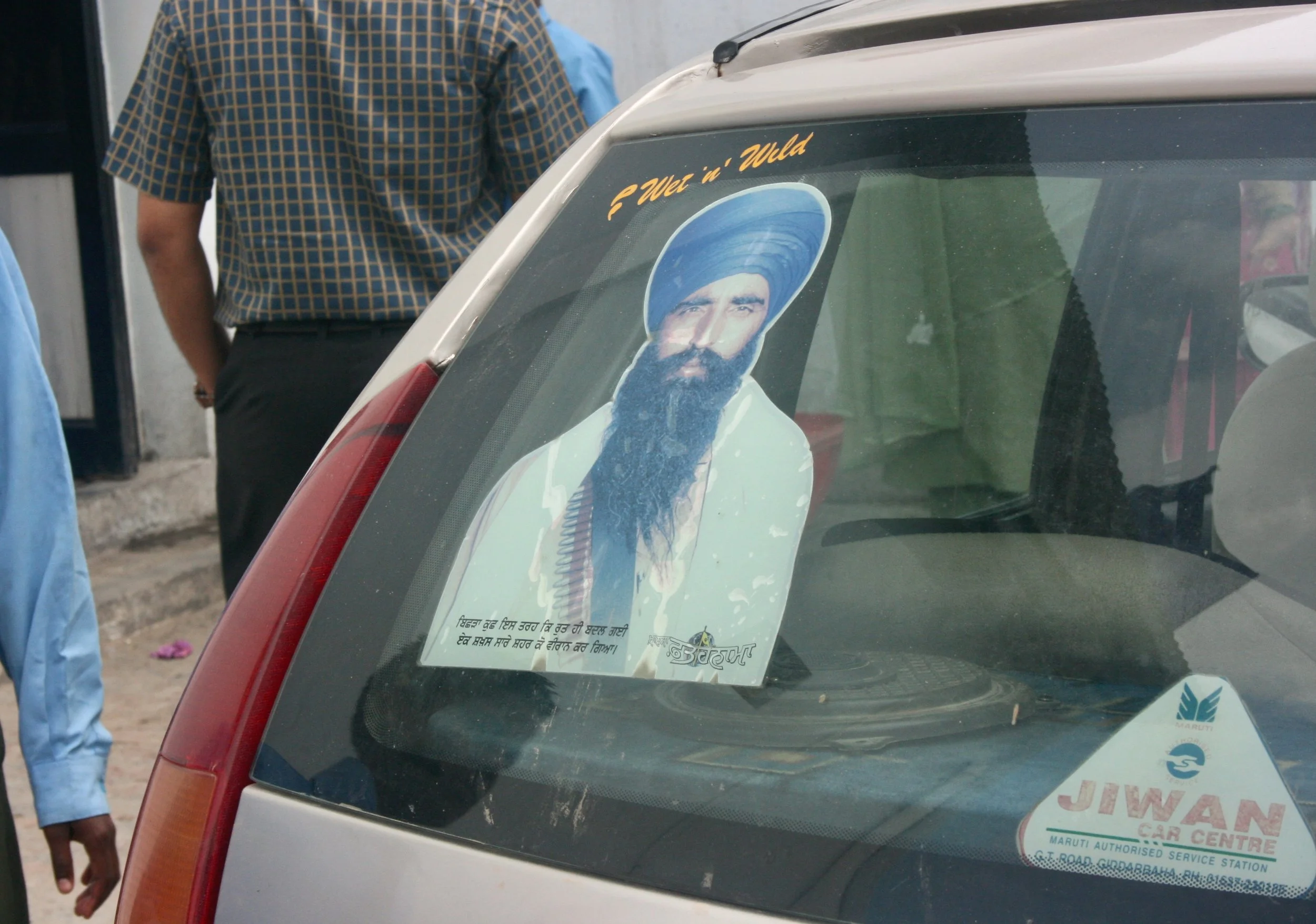
“In Punjab, there is a parallel term: mardangi. It is more than a descriptor; it is an aesthetic, a worldview, a code. Demonstrations of mardangi are what transform a male into a man. The term does not merely imply strength, it demands spectacle. It insists on a masculinity that’s not only dominant but dominant in motion: striding, threatening, commanding, sometimes hitting. Like macho, mardangi is both a noun and a verb, an essence and an enactment. It is what men have as well as what men do. A step beyond superiority, it signals entitlement to power and place. To be a mard (man), to embody mardangi or mardaani, is to go unquestioned…. It is the masculinity that legitimates power while masquerading as tradition. And in Punjab, its flagbearers are everywhere: farmers who feed the nation, soldiers who defend it, priests who guard the faith. Here, gender roles are not merely enforced, they are glorified. The rules of masculinity are celebrated in films and pop music, stitched into turbans, and plastered across the backs of trucks that crowd the Grand Trunk Road.
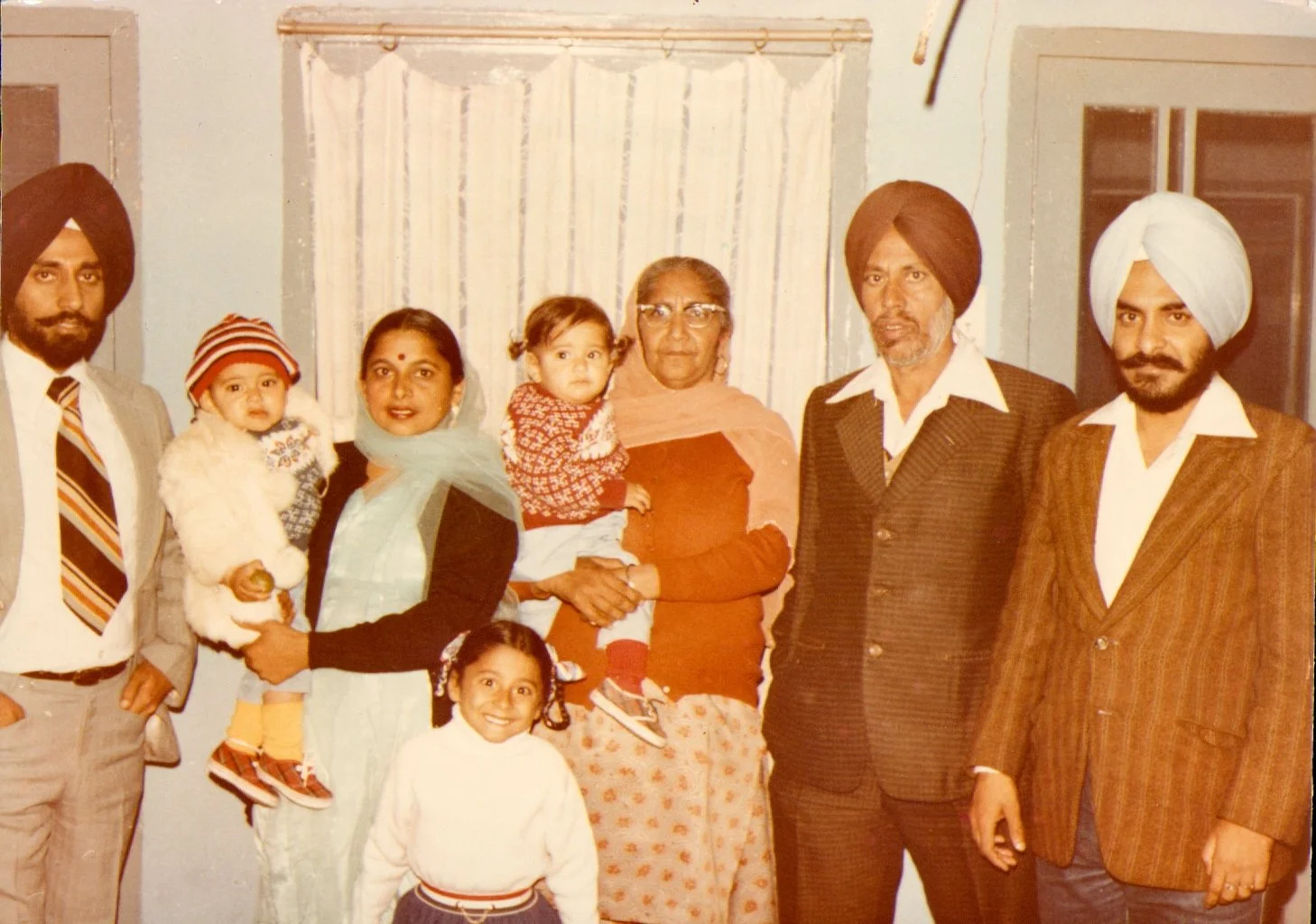
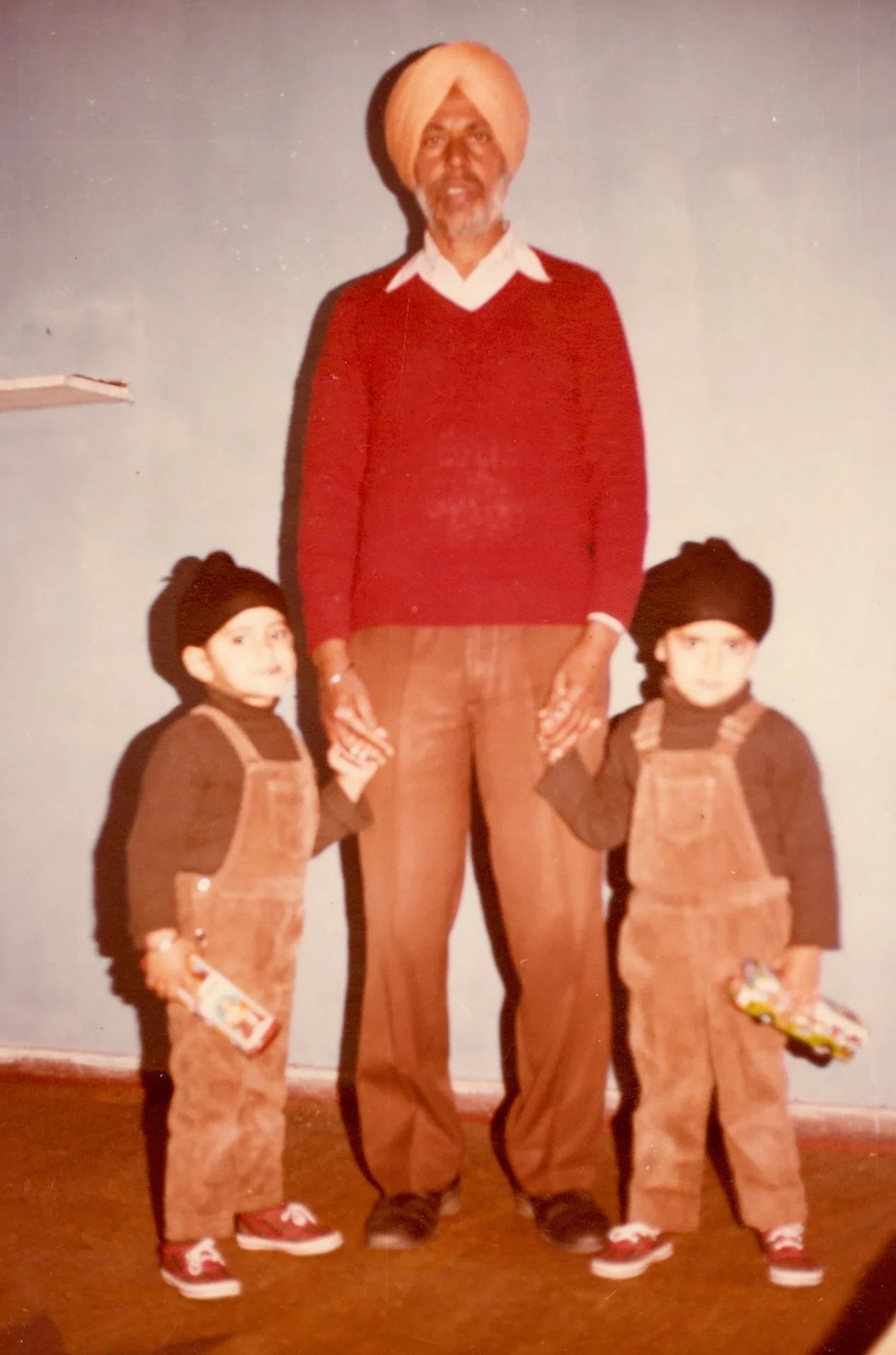
Few men fully embody mardangi. Yet everyone can recognize it. Everyone grows up hearing historical narratives or watching films that valorize it, along with the men who seem to personify it. Everyone knows someone who comes close to it. In my family, my grandfather (Papaji) was that man. In our home and in our neighborhood in Chandigarh, he was the blueprint of mardangi: Authoritative. Short-tempered. Decisive. Always a few syllables away from a tirade. After his stint in the Indian Army, he worked as a superintendent in the Punjab prison system. Even after retiring in 1981, he never stopped policing, not just prisoners but his family, his neighbors, and his legacy. He relished it. His dominance wasn’t just accepted, it was expected. He would be revered and feared until the very end. Patriarchy teaches that manhood must appear certain, resolved, and unflinching. Such a performance requires effort. It requires lifelong suppression of doubt. It requires what I witness in Papaji: a refusal to acknowledge vulnerability, a constant and exhausting projection of control. In the final years of his life, as age and dementia ravaged his body and mind, scrambling memories, timelines, and grievances, Papaji couldn’t tolerate an open door. He spent his days shuffling around his now-vacant house, latching doors and imprisoning his unsuspecting caretakers, and occasionally me, inside our bedrooms...”
-
“Patriarchy, I've come to realize, operates a lot like a pyramid scheme —an MLM, a multilevel marketing fantasy in which every man is both recruiter and recruit. At the top are the patriarchs, men like Papaji, who hold the most power and have the deepest belief in the system. They sell the dream: of authority, respect, and legacy. To sustain their position, they require buy-in from others. So they turn to the next tier: sons, grandsons, nephews, neighbors, colleagues, fellow believers in the gospel of manhood. "Join us," they imply. Be a man, protect your family, uphold traditions, and there will be rewards. The gospel is familiar. It is seductive. After all, men are not just joining a system, they are joining history. Subscriptions are marketed as fulfilment of destiny. And to keep the structure intact, members must recruit continuously, persuading the next generation of men to sign on. They must also obey the rules: marry the right person, have the right children, police one's emotions, and adhere to the preordained scripts. In return, they are promised patriarchal dividends: status, control, and the undisputed privilege of manhood in Macholand.
Like any good pyramid scheme, the patriarchal system depends on constant recruitment. But here lies the scam: The rewards rarely match the promise. Most men are not at the summit. They linger in the middle tiers, perpetually chasing a fantasy of power and control. The deeper they embed themselves, the more they discover that the payoff is thin and freighted with unanticipated costs. Responsibility without joy. Control without connection. Power without freedom. In a patriarchy, men's lives grow heavy with obligation, hollowed out by the expectations placed on them by other men above them. Grandfathers, fathers, uncles, bosses, and so on. Along with power, they inherit burdens. With their choices narrowed, men endure a steady lockdown of their emotions.”
-
“The secrecy was not unusual. Families concealed migration plans to avoid sabotage. In Punjab, people whispered about neighbors who spread rumors, filed false police reports, or dredged up old accusations of militancy to derail a visa application. The fear even had a name: Bhani-marna, to cut someone’s fate short. In this climate of secrecy and distrust, departures often came as shocks, revealed through sudden goodbyes or social media posts from the airport. “Nowadays,” one young man told me, “you only learn that your cousin or childhood friend has left upon seeing the selfie they post on Facebook from outside of terminal 3.” Amar too was left with the silence of absence. “Migration is very sudden,” he lamented. “One day you are enjoying a carefree life with your best friend. The next day, he is gone. It stirs up a violence inside you, a kind of violence that’s difficult to put into words.”
Amar’s story was not unique. During my fieldwork I heard similar heartbreak echoed in different forms, by men who had also lost their closest companions to migration. Harjinder, another middle-aged man I interviewed in Moga, still clung to the letters his childhood friend Mukesh had written after leaving for Canada in the early 1990s. Inscribed on prepaid envelopes marked AIRMAIL, with their red and blue borders faded from age, the letters were stored in a plastic box like family heirlooms. The words inside spoke of longing, of love, of promises to reunite one day. The letters slowed over time and then stopped altogether. Mukesh faded into the distance. And the friendship was preserved only in the yellowing paper Harjinder still read and reread over glasses of whiskey while nursing decades-old heartbreak.
Angrej, another young man who emigrated to the United States in 2013, remembered his childhood friend with a kind of grief that still startled him. Everyone in their village affectionally called his friend Kalu Pehelwan, the “dark-skinned wrestler,” a nickname that referenced both his dusky complexion and his broad, muscular build. The two men had grown up inseparable, another pair of jigri yaar, friends-of-the-liver. When Angrej left, Kalu Pehelwan cried for weeks. “He even offered me his land and wealth if I had stayed,” Angrej recalled somberly. Two years later, Kalu Pehelwan died of a heart attack. Angrej remained convinced it was not merely his body failing him but the heartbreak he had endured. “He died of sadness, of losing me,” he mourned quietly. Now Angrej sends money to Kalu Pehelwan’s widow and son, trying to blunt his own guilt for abandoning his beloved friend.
Across Punjab, these stories weave together into a larger pattern of loss. In the 1980s, young men disappeared into the militancy, leaving families searching for fathers, sons, and brothers who never came home. Nowadays, they disappear into migration. The departures are legal, sanctioned, even celebrated as success. But for those left behind, they are another kind of disappearance. This sense of male absence has become a defining feature of life in Punjab today. The rivers that once named the land have been overtaken by other flows—of airplanes and airports and the relentless movement of men outward. For those left behind, the absence is not easily spoken of. Punjab has songs and films that celebrate male friendship but few words for the grief of losing one’s friend-of-the-liver. Many men turn instead to alcohol or drugs to dull the pain of heartbreak. Others follow the same path their friends took, allowing themselves to be swept up by the same currents of migration that had once destabilized their seemingly routine lives.
Alongside economic strain, political unrest, and the pressures of patriarchy, young men in Punjab often described another force driving migration: peer influence, or dekha-dekhi. The logic was simple. If one friend left, another soon followed. Colloquialisms mocked these attitudes with precision. Bhed-chaal (herd mentality). Kabootar-bazi (pigeon’s play). What they disguised, in part, was the grief that lay underneath. Each departure meant another fracture in the web of relationships that held villages together. Amar spoke of it as an unacknowledged epidemic of heartbreak. “There are thousands of these stories,” he bemoaned. “Each one with its own thread of pain and sorrow.”
Lalli’s departure left Amar wary, less willing to risk intimacy with other men. “When I meet new people now,” he admitted, “I find myself asking, are you planning to leave too?” The question was not rhetorical. In today’s Punjab, it has become a way of protecting himself. Each new friendship carries the possibility of abandonment. For men like Amar, the pain of losing a best friend to migration was no less searing than the loss of a father to the militancy. It was yet another form of violence, albeit unfolding more gradually and without much acknowledgment.”